

Continuity Experiences in General/Geriatric Primary Care
In addition to their internal medicine teaching primary care clinic, IM-Ger residents will also have a longitudinal nursing home experience which continues through all four years of training.
Teaching Conferences
IM-Ger PGY 1-3 residents will have access to two hours each week of geriatric medicine interprofessional conferences while on their ambulatory blocks. PGY-4 fellows will have access to weekly geriatric medicine didactics including:
- Case conferences (including M&M)
- Core conferences
- QI and research meetings
- Journal clubs
All sessions are structured for interactive and interprofessional learning and are presented in an online/hybrid fashion to maximize participation.
IM-Ger residents in PGY1-3 will also attend intern report, morning report, Department of Medicine Grand Rounds, and the IM academic half-day conference with their IM resident peers.
Scholarly Activity
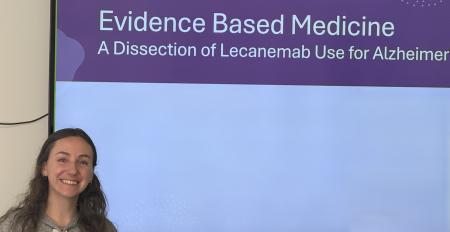
IM-Ger residents will be required to complete a scholarly project during their residency in addition to being involved in departmental QI. Residents will have two hours per week during their ambulatory blocks for PGY 1-3 and weekly during PGY 4. IM-Ger residents are encouraged to present at, and attend, at least one national conference during their four years. There are also ample opportunities to attend local geriatric medicine and internal medicine conferences, including the Dirigo-Maine Geriatrics Society (affiliate of AGS); the Maine Gerontological Society meetings and the annual Maine ACP chapter meeting.
Rural Experiences
Through our partnerships with the rural health networks including VA Maine, MaineHealth system hospitals and the Consortium for Healthcare Education and Training (Programs & Initiatives - CHET Maine | Training, Partnerships & Healthcare Workforce Development) IM-Ger residents have opportunities to explore rural geriatric care. They will also complete a dedicated fourth year rotation in rural geriatric medicine.
Curriculum Structure
For the first three years, our curriculum is organized in a “4+2” block scheduling format similar to the IM categorical program. This features alternating blocks of 4 weeks (IM categorical blocks with predominately inpatient service, night float, consult rotations, and electives) and 2 weeks (predominately continuity clinics, administrative time and vacation). The fourth year (fellowship) curriculum is organized as four-week rotations.
PGY 1-3
Categorical Blocks (4 weeks)
Vacation: 4 weeks per year (divided between +4 and +2 weeks)
| Rotation Title | R1 (total weeks) | R2 (total weeks) | R3 (total weeks) |
| General Medicine Inpatient | 8 | 8 | 8 |
| Medicine Night Float | 4 | 4 | 4 |
| Critical Care Medicine | 4 | 4 | 4 |
| Inpatient Cardiology/CICU | 4 | 4 | 4 |
| Inpatient Hematology/Oncology | 2 | 0 | 0 |
| Inpatient Nephrology Transplant | 2 | 0 | 0 |
| Other (2–4-week blocks) |
|
|
|
| Electives | 2 | 6 | 8 |
Ambulatory (2 weeks)
| Monday | Tuesday | Wednesday | Thursday | Friday | |
| 7:30-8:30 AM | Board Review | Morning Report | Geriatric Didactics (8-10 am) | ||
| Morning | Continuity Clinic | Long-term Care | Continuity Clinic | Independent Study | Long-term Care |
| Afternoon | Continuity Clinic | Intern Conference or Administrative | Continuity Clinic | Senior Conference or Administrative | Administrative |
PGY-4
Geriatric Medicine Fellowship
Vacation is scheduled during the fellowship year on an as-requested basis.
Rotation Title | Total Weeks | Fellow Experience |
| Inpatient Consultation | 12 | Provide consultation to acutely ill hospitalized patients at MaineHealth Maine Medical Center Portland, a 700-bed tertiary care center |
| Acute Rehabilitation | 6 | Admit and manage patients recovering from conditions such as strokes, amputations, spinal cord injury, multiple trauma and brain injury at New England Rehabilitation Hospital of Portland in partnership with physiatry faculty |
| Inpatient Geriatric Psychiatry | 8 | Admit and manage older adults in acute psychiatric crises as part of the inpatient geriatric psychiatric team |
| Ambulatory Skills | 6 | Rapid exposure to a variety of specialties essential to geriatric medicine, including sports medicine, integrative medicine, rheumatology, uro-gynecology and more |
| Outpatient Geriatric Psychiatry | 4 | Follow outpatient geriatric psychiatrists as they manage older adults with chronic psychiatric conditions |
| Elective | 8+ | Since geriatric medicine training is embedded earlier – more time for individualized learning |
| Rural Geriatric Medicine | 4 |
|
Other
| 2 weeks each | The Scholarly & Process Improvement rotation provides fellows with foundational training in patient safety, quality improvement and health care disparities while allowing dedicated time to use this knowledge to develop a scholarly project. During the post-acute care rotation, fellows experience working in a high-volume skilled nursing facility and are introduced to the role of the Medical Director. |
PGY-4 Continuity Experiences
Half-day and full-day continuity experiences at VA Maine Primary Care, area assisted living/nursing homes and the MHMMC Geriatric Assessment Center will be integrated into each rotation and continue throughout the training year.
Dedicated Time for Learning and Wellness
The fellowship has dedicated time for didactics and independent/wellness activities study every Thursday morning. Our lecture series includes case conferences, core content lectures, board review sessions, journal club and research conferences. Grand Rounds occurs once a month on Thursday mornings. All sessions are structured for interactive and interprofessional learning and are presented in an online/hybrid fashion to maximize participation.

Called the “Jewel by the Sea” by its celebrated native, Henry Wadsworth Longfellow, Portland combines vibrant city life with natural beauty and abundant recreation opportunities.

It's important to take good care of yourself during post-graduate training so you can fully participate in your education and patient care.