PGY2 Infectious Diseases
The PGY2 Infectious Diseases Pharmacy Residency at MaineHealth Maine Medical Center Portland (MHMMCP) is a one-year specialty-training program that offers residents training in infectious diseases pharmacotherapy with an emphasis on antimicrobial stewardship.
Advanced training in infectious diseases pharmacotherapy
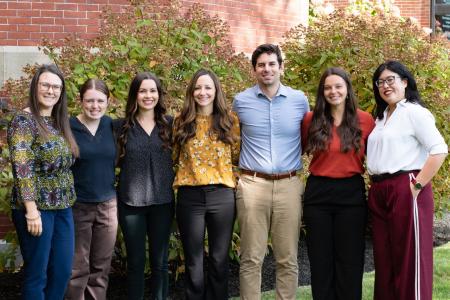
The program is designed to transition PGY1 pharmacy practice graduates from general pharmacy practice to a specialized practice focused on patients with various infectious diseases syndromes. Residents will strengthen their clinical skills through rounding with an interdisciplinary team on infectious diseases consult service and practicing independent antimicrobial stewardship. To prepare the individual to be a well-rounded independent practitioner upon program completion, rotational experiences are designed to give the resident a wide array of exposures to different patient populations with infectious diseases, including pediatric, critically ill, and immunocompromised patients.
Additionally, residents will have the opportunity to gain experience in the management of outpatient infectious diseases such as HIV (human immunodeficiency virus infection) and HCV (hepatitis C virus infection) at MaineHealth Adult Specialty Care Gilman St Portland.
Working alongside our dedicated faculty, residents become part of the multi-disciplinary care teams for patients. MHMMCP prides itself on providing a collegial and welcoming environment for residents to learn from highly qualified providers and preceptors.
When not at work, residents benefit from all that living in Portland, Maine has to offer from restaurants to outdoor activities to a thriving arts & culture scene. No matter the season, our small city packs a big punch without all the hassles of a larger city or sacrificing fun and adventure.
Our program and team are committed to ensuring residents graduate with the expertise and knowledge to be compassionate and qualified clinical infectious diseases pharmacists.
Curriculum
Our curriculum is deeply rooted in foundational experiences within primary care with many unique opportunities to experience a wide range of specialty areas and clinics. Every year our curriculum is customized to the interests and needs of the resident. The program director and preceptors will work with the resident to optimize and adjust the program and learning experiences. Please refer to our manual for more information on learning experiences (PDF, 271.82 KB).
Examples of recent PGY2 Infectious Diseases Pharmacy Residency research projects:
- Retrospective analysis comparing oral stepdown therapy for Enterobacteriaceae bloodstream infections: fluoroquinolones versus β-lactams
- Pharmacokinetics of Cefazolin in Patients With Obesity Undergoing Surgery Requiring Cardiopulmonary Bypass
- Cefazolin versus anti-staphylococcal penicillin for the treatment of methicillin-sensitive Staphylococcal aureus endocarditis
- Limited Clinical Utility of Follow-up Blood Cultures in Patients with Streptococcal Bacteremia: An Opportunity for Blood Culture Stewardship
- Interrupted time series evaluating impact of different rapid diagnostic platforms for Gram-negative bloodstream infection
- Impact of MALDI-TOF on management of infections assessed by non-blood, sterile site cultures
- Pharmacokinetics of cefepime in hospitalized adults: comparing predicted versus observed concentrations using a population-based pharmacokinetic model
- Rapid Blood Culture Diagnostics for Ambulatory Management of Uncomplicated Gram-Negative Bloodstream Infections
- Evaluation of antimicrobial courses for sepsis associated with infected renal stones requiring decompression
- Validation of local risk factors for MRSA pneumonia
- Unlocked PO-tential: Impact of an Oral Switch Guideline for Osteomyelitis
- No PICC, No problem? Dalbavancin in Severe Infections
Residency Program Director (RPD): Kristina Connolly, PharmD, BCIDP
Contact Info: 207-662-5231(office)
Kristina.Connolly@mainehealth.org
Residency Program Coordinator (RPC): Nick Mercuro, PharmD, BCIDP
Contact Info: 207-661-5170 (office)
Nicholas.Mercuro@mainehealth.org
ID-RAC Membership
- Kristina Connolly, PharmD, BCIDP
- Eliza Dollard, PharmD, BCIDP
- Nick Mercuro, PharmD, BCIDP
- Victoria Marshall, PharmD, BCIDP
- Christina Yen, MD, MBE (ad hoc)
- Katie Smith, PharmD, BCCCP (ad hoc)
- Chelsea Wampole, PharmD, BCCCP (ad hoc)
- Hannah Mazur, PharmD, BCCCP (ad hoc)
- Brady Quinn, PharmD, BCOP (ad hoc)
- Nikki Centanni, PharmD, BCPS, BCGP (ad hoc)
- Stephanie McCollett, PharmD (ad hoc)
Program structure
The program structure for required, elective, concentrated, and longitudinal learning experiences is outlined in the table below. An orientation period of 2-3 weeks will begin the residency, and will be tailored to the resident’s prior experiences.
| Rotations | Preceptor(s) | Duration |
|---|---|---|
| Required Rotations | ||
| Concentrated - PGY2 ID Orientation | Kristina Connolly, PharmD, BCIDP | 1-2 weeks |
| Microbiology/Epidemiology | Kristina Connolly, PharmD, BCIDP Nick Mercuro, PharmD, BCIDP | 2-3 weeks |
| Infectious Diseases Clinical Practice #1 | Kristina Connolly, PharmD, BCIDP Nick Mercuro, PharmD, BCIDP | 8 weeks |
| Infectious Diseases Clinical Practice #2 | Kristina Connolly, PharmD, BCIDP Nick Mercuro, PharmD, BCIDP | 8 weeks |
| Infectious Diseases Clinical Practice #3 | Kristina Connolly, PharmD, BCIDP Nick Mercuro, PharmD, BCIDP | 8 weeks |
| Health-system Antimicrobial Stewardship | Eliza Dollard, PharmD, BCIDP | 4 weeks |
| Critical Care Medicine (SICU, MICU) | Katie Smith, PharmD, BCCCP Chelsea Wampole, PharmD, BCCCP | 2-4 weeks |
| Elective Rotations | ||
| Pediatric Infectious Diseases | Eliza Dollard, PharmD, BCIDP | 2-4 weeks |
| Emergency Medicine | Hannah Mazur, PharmD, BCCCP | 2-4 weeks |
| Adult Inpatient Oncology | Brady Quinn, PharmD, BCOP | 4 weeks |
| Inpatient Renal Transplant | Recruiting | 4 weeks |
| Advanced Infectious Diseases Clinical Practice #4 | Nick Mercuro, PharmD, BCIDP Kristina Connolly, PharmD, BCIDP | 2-4 weeks |
| Ambulatory Infectious Diseases | Victoria Marshall, PharmD, BCIDP | 2-4 weeks |
| Virology (HIV, viral hepatitis), advanced | Recruiting | 2-4 weeks |
| ID Addiction Medicine | Nikki Centanni, PharmD, BCPS, BCGP Stephanie McCollett, PharmD | 2-4 weeks |
Required Longitudinal Learning Experiences
Patient Care Learning Experience
- Virology Longitudinal (HIV, viral hepatitis) (Preceptor: Victoria Marshall, PharmD, BCIDP) every Wednesday from 8-1pm for 42-48 weeks pending resident experience and interests
Service-Based Staffing (Preceptor: Kristina Connolly, PharmD, BCIDP; Nicholas Mercuro, PharmD, BCIDP)
- Weekend (Approximately every 3rd weekend; 2 training weekends + approx. 14-16 full coverage weekends) & assigned holiday staffing (4)
- Total number of full-coverage staffing days in residency year: ~32-36
Clinical Research and Medication Use Evaluation (Preceptor: Nick Mercuro, PharmD, BCIDP)
- Clinical research
- Medication use evaluation
- Development of poster/platform presentation and manuscript
Committee Membership and Practice Management (Preceptors: Kristina Connolly, PharmD, BCIDP, Eliza Dollard PharmD, BCIDP; Victoria Marshall, PharmD, BCIDP, AAHIVP, Nicholas Mercuro, PharmD, BCIDP)
- Committee involvement (e.g. antimicrobial stewardship committee(s), Pharmacy & Therapeutics)
- Formulary agent review
Teaching and Education (Preceptors: Kristina Connolly, PharmD, BCIDP, Eliza Dollard PharmD, BCIDP; Victoria Marshall, PharmD, BCIDP, Nicholas Mercuro, PharmD, BCIDP)
- Required: Various multidisciplinary presentations (e.g. grand rounds, ID case conference, ID fellow lecture series, medical intern case presentation)
- Optional as scheduling allows: College of Pharmacy didactics, Intern lecture, preceptorship of pharmacy students, PGY1 pharmacy residents, and medical students through the Tufts School of Medicine clinical pharmacology elective
Required rotations
Descriptions of the required learning experiences can be found in PharmAcademic. Required rotations in core areas (e.g. ID consult service, antimicrobial stewardship) will occur in the first half of the year, while electives will generally occur in the second half of the year.
The PGY2 resident will gain the skills to function as the infectious diseases pharmacist during their required learning experiences with the expectation that the resident displays ownership of all aspects of the medication process (e.g. operational, distributive, clinical). The resident will need to build relationships in a multidisciplinary fashion to facilitate efficient workflow and medication delivery. Daily activities include, but are not limited to:
- Participation in ID consult service rounds
- Pharmacokinetics consult service
- Collaboration with microbiology colleagues
- Order review & verification of antibiotic orders
- Manage non-formulary antimicrobials, when necessary
- Ensure proper and safe delivery of antimicrobial medications
- Provide antimicrobial pharmacotherapy recommendations to other healthcare team members
Elective rotations
Descriptions of elective learning experiences can be found in PharmAcademic. Elective rotations may be tailored to the resident’s interest and recognized areas for development. The rotations may be customized to the duration necessary for the resident, but typically range from 2 to 4 weeks. The elective learning experiences are scheduled in the second half of the residency year.
Residents may opt to choose two or three electives from the above list pending schedule and availability.
New experiences may be created on a case-by-case basis if the resident has interest in a practice area not covered by the elective learning experiences in the table above.
Service-Based Staffing
The resident’s staffing commitment will consist of providing comprehensive ID pharmacy support for the hospital on weekends and assigned holidays. On staffing days, residents will perform the same activities as other ID pharmacist team members:
- Pharmacokinetic Consults for designated floors
- Antimicrobial stewardship activities (e.g. blood culture report review, restricted antimicrobial review and approval)
- Pharmacotherapy support for ID consult service patients
- Ad hoc questions from providers and pharmacists
To provide more formative feedback, residents may meet with a preceptor following a staffing weekend to debrief and review interventions from the resident’s weekend assignment. Documentation of this meeting and feedback will occur quarterly in PharmAcademic (scheduled as a longitudinal learning experience evaluation).
Clinical research and medication use evaluation
Clinical research
- Topic Selection: on behalf of the ID-RAC, RPD will supply the resident with a list of possible research projects to consider within the first 1-2 weeks of the residency. Project selection and CITI training (see Resident’s Survival Kit supplemental booklet for specific modules to complete) should be completed prior to the end of the orientation experience. If resident has completed all of the required CITI training from prior experiences (e.g. PGY1), the resident does not need to complete additional modules. If the module will expire during the residency year, the resident is responsible for ensuring that the modules are completed and renewed for the remainder of the residency year.
- Initial Set-up: Research project methods must be disseminated, reviewed, and acknowledged by all study investigators and co-investigators. Methods may be disseminated to ID-RAC for review, if deemed appropriate. In addition, clearly defined roles and responsibilities of each investigator and co-investigator for authorship must be established at the onset of the project. In addition, criteria for order of authorship (e.g. criteria for first author, senior author) should also be established prior to starting. Research project timeline should be determined by the research project preceptor, RPD, and resident. Residents will be expected to complete 1 major research project each year.
- Dissemination of Results: the results of the research project will be presented, at minimum, in the month of June at a designated Pharmacy Grand Rounds (12-15 minutes). In addition, the resident may elect to present results of the research project at a regional or national meeting. A completed manuscript will be submitted for the research project before graduation with the understanding that articles suitable for publication will require additional work that may occur after residency completion.
- Formal meetings with project preceptor and/or all study authors: Resident is expected to maintain communication with project preceptors (and other study investigators as appropriate) and is responsible for keeping up with established timeline. The resident is responsible for setting up meetings as needed.
Medication use evaluation
Each resident will complete at least one medication use evaluation (MUE). The resident will be provided with a list of potential MUE topics generated by ID-RAC. The resident will be able to add to the list of ideas, if it is feasible within the year-long residency. The resident will conduct the MUE under the guidance of a preceptor. Results from MUE’s will be presented to the appropriate stakeholders within the hospital.
Teaching and education
The resident will track their progress in effective education or training to health care professionals through this longitudinal experience. A PharmAcademic evaluation will be used to track presentation completion. Effective education opportunities will be evaluated and will include, but is not limited to:
- Pharmacy grand rounds (1 required)
- ID Fellow Lecture Series (1 required)
- ID Case Conference (2 required)
- Journal clubs (2 required)
- Didactic lecture at University of New England (up to 1 optional)
- Medical intern case presentation (up to 1 optional)
- In-services (ad hoc)
Pharmacy Grand Rounds: The resident will deliver a 1-hour continuing education lecture to the pharmacy staff regarding a topic in infectious diseases. A presentation preceptor should be identified by RPD at least 12 weeks in advance of the presentation date. A draft of the grand rounds presentation should be delivered to the mentor at least 3 weeks prior to the presentation date. Audience assessment questions (3-4) must be included in the presentation. A practice presentation will occur at least 1-2 weeks prior. If deemed necessary by resident and preceptor, a second practice session may be scheduled.
Infectious Diseases (ID) Fellow Lecture Series (Tuesdays 1200-1300): Resident will provide one (1) 60-minute pharmacotherapy lecture within the ID Fellow Lecture series.
The ID Fellow Lecture series is a weekly learning session for the ID fellows. Lecturers are ID fellowship faculty, consisting of ID attendings and ID pharmacists. The topic for the PGY2 ID pharmacy resident to lecture is on principles of antifungal pharmacotherapy and is typically scheduled late fall.
Infectious Diseases (ID) Case Conference (Thursdays 1200-1300): In addition to attending ID case conference weekly (unless otherwise noted), the resident will present up to two (2) 30-minute presentations. Coordination of the date of presentation can be made with the ID fellows and ID fellowship director. The topic should be based on a patient or topic the resident experienced on service or while performing antimicrobial stewardship. A topic and preceptor for the case conference presentation should be identified at least 4 weeks prior to the presentation date.
Didactic lecture at University of New England College of Pharmacy (optional): The resident may deliver one 2-hour didactic lecture to pharmacy students. This will be coordinated with faculty at UNE.
Medical intern case presentation (optional): The resident may deliver one 30-minute case-based presentation to medical residents during intern academic half days.
In-services: As opportunity arises to present in-service presentations, the resident will work with a designated preceptor to successfully carry out a presentation.
Teaching certificate: Participation in the Teaching Certificate Program is optional and will be discussed on a case-by-case basis.
Journal clubs: The resident will be required to complete two journal clubs, spaced throughout the residency year. For each session, the resident should select an article related to antimicrobial stewardship and notify the project preceptor at least seven days in advance of the scheduled journal club. The resident will present an informal summary of the article, highlighting key findings, strengths and limitations of the study, and potential clinical implications.
The resident may co-precept advanced practice pharmacy experience students, medical students, or PGY1 pharmacy residents. Primary preceptorship of trainees is an optional experience and should be discussed with RPD, if interested.
Finally, the resident’s progress in covering the 2017 ASHP-required direct and indirect patient care disease states as listed in the PGY2 Infectious Diseases Pharmacy Residency Appendix will also be evaluated as part of this longitudinal Teaching and Education learning experience. The appendix progress will be tracked in Excel and is expected to be updated and maintained by the resident on an on-going basis.
Committee membership and practice management
The resident will track their progress and development in the areas of practice management and formulary drug review, order set review, and/or treatment guideline development. Committee participation (MMC antimicrobial stewardship task force committee (MMC ASP TF), MH antimicrobial stewardship and diagnostic steering committee (MH ASP), MH vaccine implementation committee, pharmacy and therapeutics committee) and practice management contributions (formulary drug review, order set review, and/or treatment guideline creation or revision) will be evaluated.
Formulary Agent Review: Each resident will complete at least one formulary review. The resident will be provided with a list of potential anti-infectives for formulary evaluation generated by ID-RAC. The resident will conduct a comprehensive formulary evaluation under the guidance of a preceptor. The formulary evaluation will be presented to the MH ASP.
Guideline, Policy, or Order Set: Each resident will develop or update at least one guideline, policy, order set, or order with clinical decision support. The resident will be provided with a list of ideas generated by IDRAC. The resident will conduct literature review and draft proposal under the guidance of a preceptor. The guideline/policy/clinical decision support will be presented to the MH ASP.
Dedicated project time
Project days will be granted during the resident year. Resident project days may be pre-assigned, and/or the resident may request to take up to 24 project days per resident year. Ad hoc project days beyond 24 day maximum are at the discretion of the ID RAC and/or RPD. The resident is expected to be onsite, unless otherwise approved, for at least 8 hours for each project day, preferably between the hours of 0700 and 1800. Regular meetings will occur with the research preceptor and/or RPD to discuss progress and accomplishments during the project days. Documentation and feedback will occur in PharmAcademic (non-learning experience evaluation). Residents are expected to self-manage time and residency responsibilities. Appropriate resident activities during this rotation include, but not limited to: clinical research, MUE, ASP committee assignments (e.g., guidelines, order sets, newsletters), Formulary review, Presentation preparation (e.g., grand rounds, ID fellow lecture, UNE lecture), and Self-directed learning (e.g., NHSN modules, reading assignments).
Professional conference attendance
The residents will have the opportunity to attend various professional meetings throughout the year. The resident typically attends ASHP Midyear Meeting and IDWeek (IDSA annual meeting) or MADID as funding allows. Other meeting attendance may be discussed and reviewed on a case-by-case basis.
Resident well-Being and resilience
- Resident will be released from clinical responsibilities one afternoon per month to support resident well being
- Resident is encouraged to take time away from the hospital and, when appropriate, connect with co-residents
- Participation in community service events may replace wellness days
- Resident will be assigned a mentor and will meet with them monthly to discuss residency progress, wellbeing, and resilience
Evaluation stragegy
The PGY2 Infectious Diseases Residency Program utilizes the ASHP online evaluation tool called PharmAcademic.
Residents will complete two pre-residency questionnaires that help the RPD design a residency year that is tailored to the specific needs and interests of the resident:
- ASHP Entering Interests Form
- Entering Objective-Based Self-Evaluation Form
The RPD uses the ASHP Entering Interest Form and Entering Objective-Based Self-Evaluation form to create residents customized training plan. The Residency Requirement Checklist and Customized Training Plan will be discussed and modified (as necessary) through a collaborative effort between the RPD and resident. In addition, the resident may request schedule modifications throughout the residency year and the RPD will make all efforts to accommodate these requests. Assessment tools will be adjusted as changes are made. The RPD will share changes to the Residency Requirement Checklist and Customized Training Plan via Pharmacademic to scheduled preceptors and during quarterly PGY2 ID-RAC meetings.
Residents’ schedules are entered into PharmAcademic. For each learning experience, the following assessments are completed:
| Learning Experiences < 12 weeks | ||
| Resident Evaluation of Learning Experience | Resident Evaluation of Preceptor | Preceptor Summative Evaluation of Resident |
| End | End | End |
| Learning Experiences > 12 weeks | |||
| Resident Evaluation of Learning Experience | Resident Evaluation of Preceptor | Preceptor Summative Evaluation of Resident | Resident Self-Summative Evaluation |
| End | End | Quarterly (or midpoint) and End | Quarterly (or midpoint) and End |
Formative feedback will be provided routinely throughout the learning experience and documented in PharmAcademic as needed.
Summative evaluations
Summative evaluations assess the residents’ mastery of the 34 required ASHP residency objectives. Summative evaluations of these objectives will be completed by both preceptors and residents based on the following scale:
| Rating Scale | Definition |
|---|---|
| Needs Improvement (NI) |
|
| Satisfactory Progress (SP) | Resident is performing and progressing at a level that should eventually lead to mastery of the goal/objective
|
| Achieved (ACH) |
|
| Achieved for Residency (ACHR)* | Resident consistently performs objective independently at the Achieved level, as defined above, across multiple settings/patient populations/acuity levels for the residency program |
| *On a quarterly basis, the RPD will review all summative and quarterly evaluations completed for learning experiences that the resident has completed and assess the ratings rendered by preceptors for each objective assigned to be taught and evaluated. | |
- Patient care objectives (e.g., R1.1, R1.2, R1.3) evaluated in three or more evaluations may be considered for achievement if:
- The resident receives satisfactory progress (SP) on three separate evaluations of that objective.
- The resident receives achieved (ACH) on two separate evaluations of that objective.
- Non-patient care objectives Practice (e.g., R2.1, 2.2), Leadership and management (e.g., R3.1, 3.2), and Teaching (e.g., R4.1, 4.2) objectives may be achieved if the graduation requirements have been fulfilled (e.g., formulary monograph completed) and the resident achieves a satisfactory progress (SP) or higher in the evaluation.
- If a learning experience preceptor has a concern about an objective that has been marked as ‘Achieved for Residency’, the preceptor should reach out to the RPD to discuss further.
- Summative Evaluations should be completed using Criteria Based Feedback statements.
- Preceptors should complete their own summative assessments, save, and then meet to discuss/review with resident. Pharmacademic resident self-summative assessments are not required unless otherwise specified by the preceptor and/or RPD. Residents should come prepared with informal self-reflection to discuss with learning experience preceptor. Any changes to the evaluation should be made in PharmAcademic, then finalized and sent for ‘Cosign’.
- Summative evaluations MUST be completed within 7 days of rotation completion.
- Evaluations are cosigned by the rotation preceptor as well as the RPD. The RPD may send an evaluation back for revision for the following reasons:
- Patient names mentioned within document
- Criteria-based qualitative feedback statements not utilized
- Signing an evaluation (both preceptors AND residents) indicates that the evaluation has been read and discussed.
The resident will complete a PGY2 Infectious Diseases Pharmacy Residency Program Evaluation in the last month of residency. Feedback will be discussed at the PGY2 ID-RAC meeting and agreed upon changes will be incorporated into the next academic structure.
PGY2 Infectious Diseases competency areas, goals, and objectives (2017 Standard)
The resident is encouraged to read detailed information about the required competency areas and each goal and objective supplied by ASHP (PGY2 Infectious Diseases Pharmacy Residency Goals and Objectives (ashp.org)).
PGY2 Infectious Diseases Residency requirements for completion/graduation
- Objective achievement: >90% of program-required objectives are marked as “Achieved for Residency” by the end of the residency year.
- Completion of all required learning experiences
- Completion of all assigned evaluations in PharmAcademic
- Completion of MUE and present at an appropriate committee meeting
- Completion of all assigned presentations:
- Pharmacy grand rounds (1 required, 60 minutes)
- ID Fellow Lecture Series (1 required)
- ID Case Conference (2 required)
- Journal Clubs (2 required)
- Completion of formulary drug review
- Develop/revise treatment guideline/policy/order set and presentation at an appropriate committee meeting
- Presentation of major research project at residency conference and/or other professional platform (e.g. national meeting, Pharmacy Grand Rounds)
- Completion of manuscript of major project in publishable form, signed off by research preceptor and RPD
- Submission of 5 reports in safety reporting system (e.g. safety, adverse drug reports) and perform dedicated follow through of at least 1 medication safety event
- Complete required patient care topic discussions per PGY2 ID topic appendix
- Completion of all assigned staffing shifts
- Upload all projects, presentations, work products required for graduation to Pharmacademic and designated program folder
Learn more about our PGY2 Infectious Diseases preceptors.
- Brady Quinn, PharmD, BCOP
- Chelsea Wampole, PharmD, BCCCP
- Christina Yen, MD MBE
- Eliza Dollard, PharmD, BCIDP
- Hannah Mazur, PharmD, BCCCP
- Katie Smith, PharmD, BCCCP
- Kristina Connolly, PharmD, BCIDP – Residency Program Director
- Nick Mercuro, PharmD, BCIDP – Residency Program Coordinator
- Nikki Centanni, PharmD, BCPS, BCGP
- Stephanie McCollett, PharmD, BCIDP
- Victoria Marshall, PharmD, BCIDP
Questions?
Reach out to our Program Director:

Kristina Connolly, PharmD, BCIDP
Pharmacy School: South Carolina College of Pharmacy
PGY1 Pharmacy Residency: Wake Forest Baptist Medical Center
PGY2 Infectious Diseases Residency: Wake Forest Baptist Medical Center
Kristina.Connolly@mainehealth.org

Life in Portland
Called the “Jewel by the Sea” by its celebrated native, Henry Wadsworth Longfellow, Portland combines vibrant city life with natural beauty and abundant recreation opportunities.

Resident & Fellow Well-Being
It's important to take good care of yourself during post-graduate training so you can fully participate in your education and patient care.

Stipend and Benefits
Resident and fellow benefits include health insurance, disability, dental/vision insurance and professional liability insurance.