PGY2 Critical Care
The PGY2 Critical Care Pharmacy Residency program at MaineHealth Maine Medical Center Portland (MHMMCP) offers residents quality training in a pharmacy-friendly institution where resident learning is of utmost importance. MHMMCP is a welcoming environment that appreciates work-life balance and supports the resident and their experience. We are dedicated to the care of our patients.
High-quality critical care pharmacy training in a supportive environment
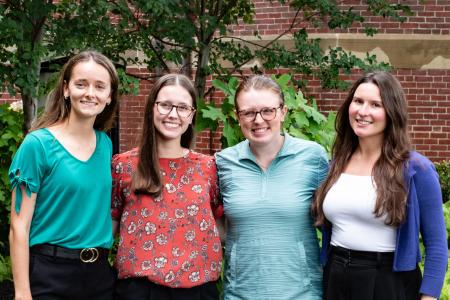
As Maine’s only Level 1 Trauma Center and a comprehensive stroke center, MHMMCP offers residents the opportunity to see a diverse array of pathology. Our pharmacists provide 24/7 coverage in the emergency department and the ICU. Pharmacists are key members of the multidisciplinary teams in our ICUs. Our providers expect us to be on rounds and are hunting us down if we are not!
Our faculty is comprised of a tight-knit group of well-respected and accomplished preceptors. Faculty work closely with colleagues from every discipline which is highlighted by our multidisciplinary research and education efforts.
Our program supports our resident’s desire to be involved in quality improvement projects as well as research. Our strong research mentorship with established clinical researchers and aspiring researchers often leads to publications (on average 5-10 per year in an interdisciplinary fashion).
Located in beautiful Portland, Maine, our setting provides an added bonus to the resident experience at MHMMCP. Maine is called “vacationland” for a reason - Lonely Planet and Fodor’s have given shout-outs to Maine as one of the best places to visit in the world. Having easy access to a range of outdoor activities and top-notch food and beer establishments to quench our foodie palates allows residents to enjoy life outside of work.
From start to finish, our staff is dedicated to our resident’s progression and ensuring they have the training and experience necessary to graduate to a competitive position. Learn more about our alumni.
Curriculum
Our curriculum is deeply rooted in foundational experiences within primary care with many unique opportunities to experience a wide range of specialty areas and clinics. Every year our curriculum is customized to the interests and needs of the resident. The program director and preceptors will work with the resident to optimize and adjust the program and learning experiences. Please refer to our manual for more information on learning experiences (PDF, 271.82 KB).
MHMMCP Pharmacy Resident Publications 2021-2026 (Bold = PGY2 Resident authors, italic = preceptor)
- Forehand CC, Benken ST, Madorsky M, Mohamed A, Nguyen JV, Dixit D, Gallagher J, Hawkins WA, Heavner MS, Johnson E, Lozano L, Sisco M, Slampak-Cindric AA, Smith SE, Spezzano K, Taylor BA, Wayne NB, Gagnon DJ. Pharmacotherapeutic Controversies During Temperature Control After Out-of-Hospital Cardiac Arrest: A Semi-Structured Literature Review. Pharmacotherapy 2026;46:e70095. doi: 10.1002/phar.70095.
- Wesley KM, Liu JT, Wampole C, Brown CS, Bourque J, Smith KE. Enteral Phosphate Replacement in the Intensive Care Unit. Ann Pharmacother 2026 Apr 20:10600280261432239. doi: 10.1177/10600280261432239. Online ahead of print.
- Torr HR, Penrod S, Cote J, Hanken SE, Chan SC, Riker RR, Leclerc A, May T, Seder DB, Gagnon DJ. Amantadine Continuation After Hospital Discharge for Acute Stroke Requiring Inpatient Rehabilitation: A Long-term Follow-up Study. Arch Rehabil Res Clin Transl 2025;7:100459. DOI: 10.1016/j.arrct.2025.100459.
- Puissant MM, Armstrong KJ, Riker RR, Haydar S, Strout TD, Smith KE, Seder DB, Gagnon DJ. Midodrine initiation criteria, dose titration, and adverse effects when administered to treat shock: A systematic review and semi-quantitative analysis. J Crit Care Med (Targu Mures) 2025;11:5-22. DOI:10.2478/jccm-2025-0007.
- Wang M, Falank C, Simboli V, Ontengco J, Spurling B, Rappold J, Chung B, Smith KE. “Should We Phenobarb-it-All?” A Phenobarbital-Based Protocol for Non-Intensive Care Unit Trauma Patients at High Risk of or Experiencing Alcohol Withdrawal. The American Surgeon 2024;90(6):1531-1539. DOI: 10.1177/00031348241244639.
- Liu J, Brown CS, Riker RR, Mara KC, Riker RR, Rabinstein AA, Fraser GL, May TL, Armstrong KJ, Seder D, Gagnon DJ. Derivation and validation of a new equation for estimating free valproate concentration in critically ill patients. Crit Care Explor. 2023;5(10):e0987. DOI: 10.1097/CCE.0000000000000987
- Weaver P, Sherman K, Smith K, Wampole C, Glisic E, Berger K, Gagnon D. Publication rate and impact stratified by gender among pharmacists designated Fellow in the American College of Critical Care Medicine. J Am Pharm Assoc (2003) 2023;63:178-181. DOI 10.1016/j.japh.2022.08.018.
- Wampole C, McKenna A, Riker RR, May TL, Seder DB, Abram D, Fraser GL, Gagnon DJ. Opioid Prescribing Patterns Before, During, and After Critical Illness: An Observational Study. Crit Care Explor 2022;4:e0735. DOI 10.1097/CCE.0000000000000735.
- Brown CS, Liu J, Riker RR, Mara KC, Rabinstein AA, Fraser GL, May TL, Seder D, Gagnon DJ. Evaluation of free valproate concentration in critically ill patients. Crit Care Explor. 2022;4:e0746.
- Riker RR, Weaver P, Torr H, Gosling K, Gagnon DJ. Comment: a review of pharmacologic neurostimulant use during rehabilitation and recovery after brain injury. Ann Pharmacother 2022;56:858-860. DOI: 10.1177/10600280211052629.
- Smith KE, Wang M, Abdukalikov R, McAuliffe A, Whitesell D, Richard J, Sauer W, Quaye A. Pain Management Considerations in Patients with Opioid Use Disorder Requiring Critical Care. J Clin Pharmacol 2022;62:449-462. DOI 10.1002/jcph.1999.
- Liu J, Smith KE, Riker RR, Craig WY, McKelvy DJ, Kemp HD, Nichols SD, Fraser GL. Methadone bioavailability and dose conversion implications with intravenous and enteral administration: a scoping review. Am J Health-Syst Pharm 2021;78:1395-1401. DOI 10.1093/ajhp/zxab166.
Residency Program Director (RPD): Kathryn Smith, PharmD, BCCCP
Contact Info: phone 662-5397; Kathryn.E.Smith@mainehealth.org
Residency Program Coordinator (RPC): Chelsea Wampole, PharmD, BCCCP
Contact Info: phone 662-0183; Chelsea.Wampole@mainehealth.org
Residency Research Coordinator (RRC): David Gagnon, PharmD, BCCCP, FCCM, FCNS
Contact Info: phone 662-1338; David.Gagnon@mainehealth.org
Critical Care Residency Advisory Committee (CCRAC) Membership
All critical care and emergency medicine preceptors for required rotations; additional preceptors or interdisciplinary colleagues ad hoc
Resident transition meetings are held in the last week of a required or elective learning experience to discuss resident progress and areas for focus in the upcoming rotation and to provide updates on resident progress in the longitudinal learning experiences. Required attendees include the outgoing learning experience preceptor, the upcoming learning experience preceptor, preceptors of longitudinal learning experiences, RPC, RPD, and RRC.
Program structure
The program structure for required, elective, and longitudinal learning experiences is outlined in the table below. An orientation period of 3-4 weeks, coordinated by the RPC, will begin the residency and will be tailored to the resident’s prior experiences.
| Rotations | Preceptor1 | Typical Duration |
|---|---|---|
| Required Learning Experiences | ||
| Cardiac ICU | Anne Andrle, MS, PharmD, BCCP | 4 weeks |
| Cardiothoracic ICU | Colton Collier, PharmD, BCCCP, BCEMP | 4 weeks |
| Emergency Medicine | Hannah Mazur, PharmD, BCCCP, BCEMP | 5 weeks |
| Infectious Diseases | Kristina Connolly, PharmD, BCIDP | 3 weeks |
| Medical Critical Care | Chelsea Wampole, PharmD, BCCCP | 4 weeks |
| Neurocritical Care | David Gagnon, PharmD, BCCCP, FCCM, FNCS | 4 weeks |
| Surgical Critical Care | AJ Golash, PharmD, BCCCP | 4 weeks |
| Trauma Critical Care | Katie Smith, PharmD, BCCCP | 4 weeks |
| Elective Learning Experiences2 | ||
| Advanced Cardiothoracic ICU | Colton Collier, PharmD, BCCCP, BCEMP | 2-4 weeks |
| Advanced Emergency Medicine | Hannah Mazur, PharmD, BCCCP, BCEMP | 2-4 weeks |
| Advanced Medical Critical Care | Chelsea Wampole, PharmD, BCCCP | 2-4 weeks |
| Advanced Neurocritical Care | David Gagnon, PharmD, BCCCP, FCCM, FNCS | 2-4 weeks |
| Advanced Surgical or Trauma Critical Care | Katie Smith, PharmD, BCCCP | 2-4 weeks |
| Clinical Toxicology | Karen Simone, PharmD, DABAT, FAACT | 2-4 weeks |
| Nutrition Support | Erica Corica, PharmD, BCNSP | 2 weeks |
| Overnight Critical Care | AJ Golash, PharmD, BCCCP | 1-2 weeks |
| Pediatric ICU | Jessica Miller, PharmD, BCPS, BCPPS | 2-4 weeks |
Longitudinal Learning Experiences
Clinical Research and Medication Use Evaluation (Preceptor: David Gagnon, PharmD, BCCCP, FCCM, FNCS)
- Clinical research project
- Development of poster/platform presentation and manuscript
- Medication use evaluation
Committee Membership and Practice Management (Preceptors: Katie Smith, PharmD, BCCCP; Chelsea Wampole, PharmD, BCCCP; Alexander Tito, BCPS, BCEMP)
- Committee involvement
- Guideline/Protocol development or Formulary drug review
- Medication Event Reporting
Service-Based Staffing Experience (Preceptor: Chelsea Wampole, PharmD, BCCCP; Alexander Tito, BCPS, BCEMP)
- Staffing
- Code blue response
Teaching and Effective Education (Preceptor: Katie Smith, PharmD, BCCCP)
- College of Pharmacy didactics
- Multidisciplinary presentations (see below for requirements)
- Preceptorship of pharmacy students, PGY1 pharmacy residents, medical students through the Tufts University School of Medicine clinical pharmacology elective, or critical care APP residents on clinical pharmacology rotation
1 Additional preceptors may be involved in above rotations based on scheduling: ICU- Clare Cycz, PharmD, BCCCP, Alan Goodfellow, RPh, BCCCP, Nathan Laliberte, PharmD, BCPS, BCCCP; EM- Emilie Burrill, PharmD, BCPS, Shayna Demari, PharmD, BCEMP, Morgan Roy, PharmD, BCPS, BCEMP, Alexander Tito, PharmD, BCPS, BCEMP; ID-Nicholas Mercuro, PharmD, BCIDP; Cardiology- Brian Carlone, PharmD, BCCP
2 Residents are encouraged to repeat at least one core rotation as an advanced elective based on resident interest
Required learning experiences
Descriptions of the required learning experiences can be found in PharmAcademic. Required learning experiences in core areas (e.g. medical critical care, surgical critical care) will be assigned in the first half of the year, while more specialized ICU learning experiences (e.g. cardiac ICU, cardiothoracic ICU) will occur in the second half of the year. The PGY2 resident will gain the skills to function as the primary ICU pharmacist during their required learning experiences with the expectation that the resident displays ownership of all aspects of the medication process (e.g. operational, distributive, clinical). The resident will build relationships in a multidisciplinary fashion to facilitate efficient workflow and medication delivery. Daily activities include but are not limited to: participation in ICU rounds, code blue response, order verification, provision of drug information, and preceptorship of pharmacy students, medical students, APP fellows, and/or PGY1 pharmacy residents. The integration of operational and clinical services prepares residents for various practice environments and develops essential skills for an advanced pharmacist practitioner.
Elective learning experiences
Descriptions of elective learning experiences can be found in PharmAcademic. Elective learning experiences may be tailored to the resident’s interest and recognized areas for development. Residents are encouraged to repeat at least one required learning experience as an advanced elective based on resident interest. The rotations may be customized to the duration necessary for the resident but most range from 2 to 4 weeks. The elective learning experiences are typically scheduled in the second half of the residency year. New experiences may be created on a case-by-case basis if the resident has interest in a practice area not covered by the elective learning experiences in the table above.
Longitudinal learning experiences
Clinical Research and Medication Use Evaluation
The RRC will supply the resident with a list of possible research projects to consider within the first two weeks of the residency. Project selection and CITI training should be completed prior to the end of the orientation experience. Research project methods may be presented at a neurocritical care research meeting for feedback and guidance prior to commencement of data collection, if deemed appropriate. Research project timeline will be determined by the RRC, RPD, and resident. The resident will be expected to complete at least 1 research project each year. The resident will present an abstract at Society of Critical Care Medicine Critical Care Congress in the spring of their residency year. The results of the research project will be presented during MHMMCP pharmacy grand rounds in June of the residency year and to other local, regional, or national meetings as appropriate. A completed manuscript will be submitted for the research project before graduation with the understanding that articles suitable for publication will require additional work that may occur after residency completion.
Each resident will complete at least one medication use evaluation (MUE). The resident will be provided with a list of potential MUE topics generated by the RRC and CCRAC preceptors. The resident will be able to add to the list of ideas if it is feasible within the year-long residency. The resident will conduct the MUE under the guidance of a preceptor. Results from the MUE will be presented to appropriate stakeholders within the hospital.
Project days/weeks will be granted during the resident year. Project days/weeks will be pre-assigned, and the resident may take up to 24 project days per year. Ad hoc project days beyond the 24-day maximum are at the discretion of the RPD and learning experience preceptor. During project days/weeks, the resident is expected to be onsite, unless otherwise approved, for at least 8 hours daily, preferably between the hours of 0700 and 1800. Regular meetings will occur with the RRC and/or RPD to discuss progress and accomplishments during the project days/weeks. Documentation of resident productivity and details of projects and progress during their protected research time will be completed in PharmAcademic.
Committee Membership and Practice Management
The resident will track their progress and development in the areas of practice management and formulary drug review, and/or treatment guideline/protocol development. Committee participation (e.g. code blue, ED critical care council, critical care pharmacy team meetings, formulary subcommittee, pharmacy and therapeutics committee) and practice management contributions (e.g. formulary drug review, and/or treatment guideline or protocol creation or revision) will be evaluated.
Medication safety event reporting will also be tracked. The resident is required to enter a minimum of 5 medication safety reports prior to graduation. The resident will be required to significantly engage in investigation and follow up with at least one medication safety report. Progress will be reviewed at quarterly development planning meetings.
Service-Based Staffing
The resident’s service commitment is two 12 hour shifts every 3-4 weekends. The first 2-3 staffing weekends are training weekends with a dedicated preceptor, the remaining will be staffed independently. The resident’s weekend service commitment will consist of service-based staffing in the emergency department or in the intensive care units. Staffing will be determined by resident interest and departmental needs and is coordinated by the Residency Program Coordinator (RPC). The resident receives a compensation day on the Monday following a staffing weekend. The resident will be assigned to staff four holidays throughout the residency year.
To provide formative feedback, residents are expected to briefly meet with a preceptor following a staffing weekend to debrief and review interventions from the resident’s weekend assignment. Documentation of this meeting and feedback will occur in PharmAcademic.
The resident is assigned a cardiac arrest pager at the beginning of the residency year and is expected to attend all cardiac arrests when staffing. The resident will document an intervention at each cardiac arrest response using Smart text "MH IP RX Adult Code Documentation”. These interventions will be reviewed as part of the quarterly evaluation.
Teaching and Effective Education
The resident will track their progress in effective education or training to health care professionals through this longitudinal experience. Education opportunities will be evaluated and will include pharmacy grand rounds (1 required), didactic lecture at University of New England (1 required), nursing in-services (2 required), critical care journal club (2 required), clinical pearl presentation at New England Critical Care Pharmacotherapy Symposium (1 required), medical critical care education series (3 required) and critical care medicine fellowship conference (1 required).
- Pharmacy grand rounds: The resident will deliver a 1-hour continuing education lecture to the pharmacy staff regarding a topic in critical care. A mentor should be identified at least 8-12 weeks in advance of the presentation date. The title and objectives are due 6 weeks in advance of the presentation date. Audience assessment questions (3-4) must be included in the presentation. A draft of the grand rounds presentation should be delivered to the mentor at least 3 weeks prior to the presentation date. A practice presentation may be considered at least one week prior, if deemed necessary by resident and preceptor. An on-demand PharmAcademic evaluation will be used to track Grand Rounds completion.
- Didactic lecture at University of New England (UNE): The resident will deliver at least one 1- or 2-hour didactic lecture to pharmacy students. The resident may also participate in a simulation lab with the pharmacy students. This will be coordinated with faculty at UNE and a residency preceptor will be identified to mentor the resident’s presentation. An on-demand PharmAcademic evaluation will be used to track didactic lecture completion, and feedback from faculty and students will be attached if available.
- Nursing in-services: The resident will give two nursing in-services per year. The in-services may be coordinated through the critical care clinical nursing educator. The resident may also work with preceptors to identify opportunities for a nursing in-service during the residency year. An on-demand PharmAcademic evaluation will be used to track nursing in-services, and feedback from nurses will be attached.
- Critical care journal club: The critical care journal club occurs monthly on the first Tuesday of the month. The resident will present at least twice during the residency year unless other opportunities arise (e.g. SCCM CPP Journal Club). Journal club topics should focus on critically reviewing a recently published journal article related to critical care. The journal club presentation will be coordinated with the RRC. The article should be selected and approved by the RRC and/or Medical Critical Care Director at least 4 weeks in advance of the presentation. The presentation is typically 20-30 minutes in duration and a one-page handout and/or PowerPoint is required. An on-demand PharmAcademic evaluation will be used to track journal club presentations.
- Clinical pearl presentation at New England Critical Care Pharmacotherapy Symposium (NECCPS): The resident will prepare a 5-minute clinical pearl on a unique topic related to critical care to be presented at the NECCPS. This is coordinated by faculty at Northeastern University, who set the deadlines for topic and presentation submissions. The symposium typically occurs in the fall of the residency year. At least one preceptor from the residency program is in attendance, and an on-demand PharmAcademic evaluation will be used to track the symposium presentation.
- Medical Critical Care Education Series: The resident will present 3 topics (pain, insulin management, and sedation) throughout the residency year for the medical critical care education series. The medical critical care education series typically takes place weekly on Thursday afternoons at 1 pm and the material is repeated every 4 weeks. The resident will present their first topic during their medical critical care core rotation and will deliver the other two presentations during the remainder of their residency year.
- Critical Care Medicine (CCM) Fellowship Conference: The resident will present to CCM fellows at their weekly conference. The resident typically presents on pharmacokinetics and pharmacodynamics in the critically ill patient. The lecture usually takes place in the spring, and will be facilitated through the RPD or other designated preceptor and the CCM program coordinator. An on-demand PharmAcademic evaluation will be used to track the PCCM fellowship conference lecture.
- Teaching certificate: Participation in the Teaching Certificate Program is optional and will be discussed on a case-by-case basis.
The resident will co-precept at least two advanced practice pharmacy experience students, medical students, APP fellows, or PGY1 pharmacy residents.
Finally, the resident’s progress in covering disease states listed in the Critical Care Appendix will also be evaluated as part of this longitudinal learning experience. The appendix progress will be tracked in an Excel Spreadsheet saved in the residency Microsoft Teams folder. Readings for the topics can be found in the Teams folder for the residency.
Professional meeting attendance
The resident may have the opportunity to attend various professional meetings throughout the year. The resident typically attends New England Critical Care Symposium, ASHP Midyear Meeting, and Society of Critical Care Medicine as funding allows. Other meeting attendance may be discussed and reviewed on a case-by-case basis.
Evaluation strategy
The PGY2 Critical Care Pharmacy Residency Program utilizes the ASHP online evaluation tool PharmAcademic. Residents will complete the initial electronic development plan in PharmAcademic within the first week of residency. The resident’s interests and self-assessment will help the RPD design a residency year that is tailored to the specific needs and interests of the resident.
The RPD uses the initial resident feedback to create the resident’s customized development plan. The Residency Graduation Requirement Checklist and Customized Development Plan will be discussed and modified (as necessary) through a collaborative effort between the RPD, RPC, and resident. In addition, the resident may request schedule modifications throughout the residency year and the RPD and/or RPC will make all efforts to accommodate these requests. Assessment tools will be adjusted as changes are made. The RPD will share changes to the Residency Graduation Requirement Checklist via Microsoft Teams and Customized Development Plan via PharmAcademic automated emails to scheduled preceptors and during quarterly PGY2 CCRAC meetings.
The resident’s schedule is entered into PharmAcademic. For each learning experience, the following assessments are completed:
| Learning Experiences < 12 weeks | ||||
| Resident Evaluation of Learning Experience | Resident Evaluation of Preceptor | Preceptor Verbal Midpoint Evaluation of Resident | Preceptor Summative Evaluation of Resident | Resident Self-Summative Evaluation |
| End | End | Midpoint | End | End |
| Learning Experiences > 12 weeks | |||
| Resident Evaluation of Learning Experience | Resident Evaluation of Preceptor | Preceptor Summative Evaluation of Resident | Resident Self-Summative Evaluation |
| End | End | Quarterly (or midpoint) and End | End |
Formative feedback will be provided routinely throughout the learning experience and documented in PharmAcademic as needed.
Summative evaluations
Summative evaluations assess the residents’ mastery of the 32 required ASHP residency objectives. Summative evaluations of these objectives will be completed by both preceptors and residents based on the following scale:
| Rating Scale | Definition |
|---|---|
| Needs Improvement (NI) |
|
| Satisfactory Progress (SP) | Resident is performing and progressing at a level that should eventually lead to mastery of the goal/objective
|
| Achieved (ACH) |
|
| Achieved for Residency (ACHR)* | Resident consistently performs objective independently at the Achieved level, as defined above, across multiple settings/patient populations/acuity levels for the residency program |
| *On a quarterly basis, the RPD will review all summative and quarterly evaluations completed for learning experiences that the resident has completed and assess the ratings rendered by preceptors for each objective assigned to be taught and evaluated. | |
- Summative Evaluations should be completed using Criteria-Based Feedback statements
- Preceptors and residents should complete their own summative assessments, save, and then meet to discuss together. Any changes to the evaluation should be made in PharmAcademic then finalized and sent for ‘Cosign.’
- Summative evaluations MUST be completed within 7 days of rotation completion.
- Evaluations are cosigned by the rotation preceptor as well as the RPD. The RPD may send back an evaluation for revision for the following reasons:
- Significant misspellings
- Patient names mentioned within document
- Criteria-based qualitative feedback statements not utilized
- Signing an evaluation (both preceptors AND residents) indicates that the evaluation has been read and discussed.
- On a quarterly basis, the RPD will review all summative and quarterly evaluations for learning experiences that the resident has completed and assess the ratings rendered by preceptors for each objective assigned to be taught and evaluated to determine progress toward achievement of that objective.
- The resident will complete a PGY2 Critical Care Program Evaluation in the last month of residency. Feedback will be discussed at the PGY2 CCRAC meeting and the changes agreed upon will be incorporated into the next academic year.
PGY2 Critical Care Competency Areas, Goals, and Objectives (2016 Standard)
The resident is encouraged to read detailed information about the required competency areas and each goal and objective supplied by ASHP (PGY2 Critical Care Pharmacy Residency Goals and Objectives). A report may be generated by PharmAcademic to demonstrate the goals and objectives taught and evaluated in required and elective learning experiences.
PGY2 Critical Care Residency Requirements for Completion/Graduation:
- Objective achievement: Minimum of 90% program-required objectives rated as “Achieved for Residency.” No objectives rated as “needs improvement” on final rating (see criteria for achievement of objectives in shared residency manual under “Development Plan”)
- Completion of all required learning experiences
- Completion of all assigned evaluations in PharmAcademic
- Completion of medication use evaluation and presentation at an appropriate committee
- Completion of all assigned presentations
- Pharmacy grand rounds (1 required)
- Didactic lecture at University of New England School of Pharmacy (1 required)
- Nursing in-services (2 required)
- Critical care journal club (2 required)
- Clinical pearl presentation at New England Critical Care Pharmacotherapy Symposium (1 required)
- Medical critical care education series (3 required)
- Critical care medicine fellowship conference (1 required)
- Completion of formulary drug review and /or develop/revise treatment guideline/protocol and presentation at an appropriate committee meeting
- Presentation of major research project at Pharmacy Grand Rounds and/or other professional platform (e.g. regional or national conference)
- Completion of manuscript of major project in publishable form, signed off by RRC
- Submission of 5 reports in safety reporting system (e.g. safety, adverse drug reports) and dedicated follow-through of at least 1 medication safety event
- Completion of required direct patient care topic discussions per PGY2 Critical Care Topic Appendix
- Completion of assigned staffing shifts
- Upload all projects, presentations, work products required for graduation to designated program folder and PharmAcademic
Learn more about the PGY2 Critical Care preceptors.
- AJ Golash, PharmD, BCCCP
- Alan Goodfellow, PharmD, BCCCP
- Alexander Tito, PharmD, BCPS, BCEMP
- Anne Andrle, PharmD, BCCP
- Brian Carlone, PharmD, BCCP
- Chelsea Wampole, PharmD, BCCCP – Residency Program Coordinator
- Clare Cycz, PharmD, BCCCP
- Colton Collier, PharmD, BCCCP, BCEMP
- David Gagnon, PharmD, BCCCP, FCCM, FNCS- Residency Research Coordinator
- Elizabeth Glisic, PharmD, BCCCP
- Emilie Burrill, PharmD, BCPS
- Erin Corica, PharmD, BCNSP
- Emory Johnson III, PharmD
- Hannah Mazur, PharmD, BCCCP, BCEMP
- Jessica Miller, PharmD, BCPS, BCPPS
- Karen Simone, PharmD, DABAT, FAACT
- Katie Smith, PharmD, BCCCP- Residency Program Director
- Kristina Connolly, PharmD, BCIDP
- Morgan Roy, PharmD, BCPS, BCEMP
- Nathan Laliberte, PharmD, BCPS, BCCCP
- Nick Mercuro, PharmD, BCIDP
- Shayna Demari, PharmD, BCEMP
Questions?
Reach out to our Program Director:

Katie Smith, PharmD, BCCCP
Pharmacy School: University of Connecticut
PGY1 Pharmacy Residency: University of Utah
PGY2 Critical Care Residency: University of Utah
Kathryn.e.smith@mainehealth.org

Life in Portland
Called the “Jewel by the Sea” by its celebrated native, Henry Wadsworth Longfellow, Portland combines vibrant city life with natural beauty and abundant recreation opportunities.

Resident & Fellow Well-Being
It's important to take good care of yourself during post-graduate training so you can fully participate in your education and patient care.

Stipend and Benefits
Resident and fellow benefits include health insurance, disability, dental/vision insurance and professional liability insurance.