PGY1 Pharmacy
The PGY1 Pharmacy Residency Program at MaineHealth Maine Medical Center Portland (MHMMCP) develops the clinical skills, professional confidence, and practice readiness required of a Pharmacist Clinician. Graduates of our program demonstrate proficiency in critical thinking, interpersonal communication, primary literature evaluation, team-based patient care, clinical education, and scholarly research.
Preparing Pharmacist Clinicians for the next phase of their professional journey
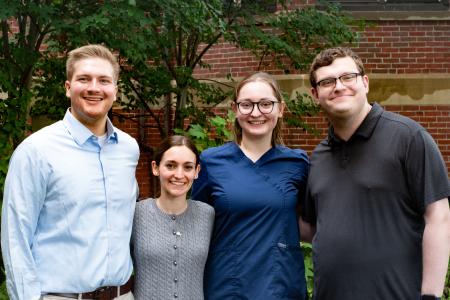
As both a tertiary care referral center and a community hospital, MHMMCP exposes PGY1 residents to a broad range of pathology across numerous subspecialty areas and a diverse patient population. Our goal is to develop competent, compassionate Pharmacist Clinicians who are prepared for the next stage of their careers.
More than 50 dedicated preceptors are invested in resident development, and our collaborative culture of safety fosters strong relationships among residents, pharmacy faculty, and interdisciplinary care team members. PGY1 residents are fully integrated into patient care teams from the start of the program.
Life in Portland
The PGY1 Pharmacy Residency at MHMMCP is a rigorous program balanced by the exceptional quality of life in Portland, Maine. Residents enjoy year-round outdoor recreation, a nationally recognized restaurant scene, and a vibrant arts and entertainment community, all within minutes of campus. Portland consistently delivers the cultural depth of a major city without the cost or congestion.
Curriculum
Our curriculum is developed to provide each resident with exposure to a broad range of experiences. Every year our curriculum is customized to the interests and needs of the resident. The program director and preceptors will work with the residents to individualize the program and learning experiences. Please refer to our manual for more information on learning experiences (PDF, 271.82 KB).
Longitudinal research projects are structured in traditional chronological format. Residents choose from a list of research projects at the beginning of the year.
- Residents receive guidance throughout the process from mentor(s) and Residency Advisory Council – Investigational Team (RAC-IT) members
- Residents present a poster at the Vizient Council Meeting and/or the ASHP Midyear Clinical Meeting and Exhibition
- Residents deliver a platform presentation at local regional pharmacy conferences
- MHMMCP residents have a successful track record of having their project manuscripts being accepted for publication in a peer reviewed journal
Examples of recent PGY1 Pharmacy Residency research projects:
- 2025-2026:
- Pharmacist Optimization of Stress Ulcer Prophylaxis in Critically Ill Patients: A Before-and-After Study
- An Exploratory Study of Baseline HbA1c and Urogenital Infection Risk in Patients with Type 2 Diabetes Initiated on Empagliflozin
- Effectiveness of Pegfilgrastim in Interval-Compressed VDC-IE Chemotherapy for Ewing Sarcoma
- Characterizing Inpatient Methadone Initiation Patterns and Outcomes in Opioid Use Disorder
- 2024-2025:
- Implementation of Medication Dispense Tracking Technology for Patient Specific Preparations
- Risk Factors Associated with Acute Kidney Injury in Patients Receiving Antibiotic Cement Spacers during Two-Stage Exchange for Periprosthetic Joint Infection
- Enteral Phosphate Replacement in the Intensive Care Unit
- Pretransplant Midodrine Use and Outcomes in Kidney Transplantation
- 2023-2024:
- Clinical Outcomes of Combination of Ceftaroline and Vancomycin versus Vancomycin Monotherapy for MRSA Bloodstream Infection
- Guanfacine for the Management of Delirium in Hospitalized Older Adults
- Safety of Intermittent Intravenous and Intramuscular Midazolam Injection in Hospitalized Patients in Non-Intensive Care Nursing Units
- 2022-2023:
- Evaluation of a Burn Pain and Sedation Clinical Practice Guideline: A Before-and-After Study
- Evaluation of Intravenous Immunoglobulin in the Treatment of Severe Hypogammaglobulinemia in Kidney Transplant Recipients to Prevent Hospitalizations Due to Infection
- Effect of appropriateness of antimicrobial regimens at discharge on global patient outcomes
- 2021-2022:
- Medication warning override rates in the EHR by profession and level of training
- Evaluation of a standardized two-bag protocol for the management of diabetic ketoacidosis in pediatric intensive care unit patient
- Embedded clinical pharmacist impact on epidiolex lab monitoring requirements
- Clinical pharmacist real-time review of pediatric discharge prescriptions: can we prevent medication errors?
- 2020-2021:
- Bleeding and Thrombotic Complications in Patients with Left Ventricular Assist Devices (LVADs)
- Penicillin Resistance Among Viridans Group Streptococcal Native Valve Endocarditis
- Characterization of Treatment and Outcomes in Non-HACEK Gram-Negative Bacilli Endocarditis at an Academic Medical Center
- 2019-2020:
- Evaluation of a perioperative anticoagulation protocol in renal transplantation: a retrospective analysis
- A retrospective review of the safety and effectiveness of direct oral anticoagulants (DOACs) in obese patients with atrial arrhythmias who underwent electrical cardioversion
- Evaluation of a burn pain and sedation clinical practice guideline: the before cohort
- Evaluation of an institution-specific protocol for hyperglycemic crises management
- 2018-2019:
- Doxycycline versus vancomycin for cystic fibrosis exacerbations among pediatric patients with MRSA colonization
- The impact of a clonidine transition protocol on dexmedetomidine withdrawal in critically ill pediatric patients
- Evaluation of a bivalirudin dosing nomogram for heparin-induced thrombocytopenia
- Appropriateness of anticoagulation in patients with atrial fibrillation admitted with acute ischemic stroke
- Assessment of dyskalemia with pentobarbital administration using a monitoring protocol
RPD: Nathan F. Laliberte, PharmD, BCPS, BCCCP
RPC: Stephanie McCollett, PharmD, BCIDP
Office: (207) 661-3871
Email: Nathan.Laliberte@mainehealth.org
RAC Membership: All PGY1 Preceptors
Program Structure
- 52 weeks in duration, including 4 project weeks
- 10 rotation blocks consisting of 7 required and 3 elective blocked learning experiences
- Blocks 3, 8, and 10 are 4 weeks in duration. The remainder are 5 weeks.
Required Blocked Learning Experiences
- Pharmacy Practice Orientation
- Adult Inpatient Medicine
- Pharmacy Practice Administration
- Adult ICU – MICU, SICU, TICU or combination
- Infectious Diseases
- Pediatrics
- Ambulatory Care (selective) – at least one of the following
- Adult Outpatient Hematology/Oncology
- Anticoagulation Outpatient
- Primary Care
- Specialty Pharmacy
Elective Blocked Learning Experiences
- Inpatient Adult Hematology/Oncology
- Inpatient Anticoagulation
- Cardiology
- Emergency Medicine
- Advanced Emergency Medicine
- Advanced Adult Internal Medicine
- Health System Pharmacy
- Medication and Patient Safety
- Nutrition Support
- Pediatric Critical Care
- Psychiatry and Addiction Medicine
- Cardiothoracic ICU
Other Required Learning Experiences
- RPD Orientation to the Residency – 4 hours
- Medication Event Reporting – 5 reports, 1 follow up
- Resident-Student Seminar – 3 weeks
- MITE CTC Teaching Certificate – 6 weeks
- Formulary Drug Review and Presentation – 8 weeks
- Medication Utilization Evaluation – 11 weeks
- Pharmacy Grand Rounds – 11 weeks
- Pharmacy Practice – 45 weeks
- Chronological Research Project – 45 weeks
- Code Blue Participation – 45 weeks
- Committee PGY1 Participation – 45 weeks
- Mentorship – 45 weeks
Pharmacy Practice
Residents’ Pharmacy Practice Commitment
- Training Weekends
- Approximately July 2027 – September 2027
- One 12-hour shift every other weekend
- Independent Staffing
- Approximately September 2027 – June 2028
- Two 12-hour shifts every 4th weekend
- Decentralized Shifts
- May be assigned starting in January 2027 based on resident competence and departmental need
Weekend Shift Adjustments
- Residents must find their own coverage for adjustments to assigned weekend shifts. This excludes callouts for illness.
- PTO may not be scheduled on assigned weekend shifts
- Weekend swaps should be reviewed for compliance with the duty hour policy monthly
- Shift swaps must be submitted in writing to the Pharmacy Practice Preceptor and RPD 2 weeks in advance of the scheduled weekend shift and should reflect the training competency of both parties in the assigned staffing area
- Residents are encouraged to
- Swap shifts with a co-resident
- Swap shifts with another clinical pharmacist on your assigned weekend
Post Weekend Shift Compensation Time
- Residents have an in-office project day on the Monday following their RPD assigned every other week 12-hour weekend shift
- Residents are off the Monday following completion of two consecutive RPD assigned 12-hour weekend shifts
- Please ensure your preceptors and other stakeholders are given advance notice of this compensation time
Chief Resident
- The Chief Resident is a PGY1 Resident who assists the RPD in gaining consensus, coordinating schedules, and other tasks as necessary
- The Chief Resident role must always be occupied
- PGY1 Residents must elect a Chief Resident
- RPD will assign a Chief Resident if PGY1 Residents fail to elect a Chief Resident
- The Chief Resident role must be held by an individual for a minimum of 3 months
- The Chief Resident Role may not be held by an individual for greater than 6 months
Resident Wellness Days
- Residents will be dismissed from all residency-associated duties by 1400 on the 4th Friday of every month, excluding June and December
- Residents may not stay at the hospital in official capacity after dismissal
- Residents may not engage in any residency-related duties after dismissal
- Wellness Days 2026-2027
- 7/23/2027
- 8/27/2027
- 9/24/2027
- 10/22/2027
- 11/27/2027
- 1/28/2028
- 2/25/2028
- 3/24/2028
- 4/28/2028
- 5/26/2028
Talkspace
Talkspace is a platform to promote wellness and provide employee support.
Community Service Events
- Two Community Service Events should be conducted during the residency year
- Required Community Service Events should be scheduled by Chief Resident a minimum of 6 weeks in advance and should take place on a Wellness Day
- See www.preblestreet.org, www.unitedwaygp.org, www.habitatportlandme.org, and www.portlandtrails.org for Community Service Event ideas
- Residents will be dismissed from all non-Community Service Event related residency obligations by 1200 or at least one hour prior to the start of any Community Service Events, whichever occurs sooner. Residents may not engage in any residency-related duties after Community Service Events
Resident-Student Seminar (RSS)
- The RSS is a 4-week experience where PGY1 residents develop, design, lead and assign topics for presentation and review to pharmacy students currently on rotation at MHMMCP. There are 4 one-hour long seminars over the course of the residency year. Each resident will take a turn selecting a topic and leading a seminar.
- Seminar topics can be any topics relevant to healthcare. Topic ideas should be reviewed with RPD and/or other preceptor(s) within the related practice area. Topics should be identified at least 3 weeks prior to the RSS date. Residents should reserve a room in the Dana Center suitable for at least 15 people between 1400 and 1530 for the date of their RSS. All room reservations must be made 6 weeks prior to the RSS date.
- All students scheduled to be on rotation at MHMMCP at the time of each RSS should receive a timely email invitation along with any required pre-RSS assignments. Please use the standardized email template and copy RPD and Jill Barnes on all communication. Please see the PGY1 Resident Schedule 2026-2027 for communication due dates.
- Student email addresses should be obtained from Jill Barnes or from the student rotation list on the acute care pharmacy clinical dashboard. Students should also be sent a link to the Resident Student Seminar Feedback Survey. See the RSS learning experience description in PharmAcademic for further details.
Resident-Student Mentor Experience
- The RPD will assign each resident a longitudinal student to mentor for the duration of the year. The pivotal role of the Mentor is to establish a relationship of mutual trust with the mentee. The Mentor should familiarize themselves with commonly accepted virtues of trust, such as: capability, competence, care, reliability, sincerity, and transparency.
- The Mentor should seek to build rapport with the mentee by consistently engaging them in candid and genuine conversations related to the experiences of the mentee.
- The duties and expectations of the Mentor must be continuously assessed and adapted to meet the unique needs of the mentee.
- Mentors commonly assist mentees in navigating P4 year, resolving interpersonal conflict, career planning, interview preparation, national conference participation, professional society engagement, and professional engagement.
- The Mentor should schedule formal check-in meetings with the mentee at a minimum of monthly intervals. The frequency of scheduled check-in meetings should be adjusted as needed to meet the needs of the mentee.
Resident Progress Group (RPG)
- The Resident Progress Group (RPG) consists of the RPD, resident, current preceptor, upcoming preceptor, project preceptor, and resident mentor.
- RPG meets monthly for 60 minutes. During the first 30 minutes, the RPD, current preceptor, upcoming preceptor, project preceptor, and resident mentor meet in the presence of the resident to candidly and respectfully discuss resident performance, resident wellbeing, and plans for resident growth.
- During the subsequent 10 minutes, the RPG discusses all project related activities. The project preceptor then leaves. The remaining 20 minutes are dedicated to reviewing all other non-project related resident activities, as per the standing RPG agenda.
- Residents are responsible for completing the quarterly Individual Development Plan for review during the RPG meeting at baseline July 1, October 1, January 1, and April 1st. This is located in PharmAcademic. Refer to the ASHP entering self-assessment document when completing the development plan. Please see the RPG Agenda Template for more information.
Meeting Attendance
Residents must attend the following meetings:
- ASHP Midyear Clinical Meeting
- New England Residency Conference or Eastern States
MHMMCP PGY2 Early Commitment Track
If you are considering applying for early commitment to one of MHMMCP’s PGY2 residencies:
- Review the ASHP Early Commitment Process
- Reach out to the RPD of that program and request a meeting
- Consider the first 5 months of the residency as a longitudinal interview
- Request a rotation in the practice area of interest prior to Midyear
Application Information
- CV
- Letter of intent
- Statement of good standing by PGY1 RPD
- PGY1 summative evaluations will be considered part of the application
- Application Deadline of November 1st of the current year
General Information
- A PGY1 resident may only apply to one PGY2 program through Early Commitment Process
- Applications will be reviewed by respective PGY2 RAC committees and scored using the same program-specific standardized scoring tool as external candidates with the following exception:
- PGY1 summative evaluations may be used in place of letters of recommendation
- Residents participating in the Early Commitment Process selected for interview will be interviewed before the end of November of the year the application was received.
- Early Commitment Interviews will follow the same format and scoring utilized for non-early commitment track candidates with the following exceptions:
- Tour and/or lunch may be excluded
- Interviews may be conducted virtually or in person
- PGY2 RPD must provide all residents participating in the early commitment process with a final decision by the third Friday in December of the year the application was received.
- If a resident participating in the Early Commitment Process wishes to proceed with an early commitment offer, the PGY2 RPD will provide the resident with a letter of agreement that outlines all pre-employment requirements, terms, and conditions that constitute acceptance of the position.
- The PGY2 RPD and candidate will sign the current National Matching Service (NMS) Residency Early Commitment Agreement and send to NMS.
- If the position is not accepted, this procedure may be duplicated with the next highest-rated candidate if applicable.
- Candidates who do not accept the offered position can also reapply following the same procedures as outside candidates. The candidate understands that this option does not guarantee an interview.
- If no candidates are offered the position, candidates can elect to apply for the program again when the position becomes open to all applicants. The candidate understands that this option does not guarantee an interview.
Resident and Preceptor Evaluation Strategy
- Residents complete learning experience, preceptor, and self-assessment summative evaluations within PharmAcademic
- Residents are also evaluated by preceptors on summative evaluations. Additional evaluations of residents for the Resident Lecture Series will be completed via CloudCME, Microsoft Forms, or analogous and should be used for fulfillment of the NEPPTLS portfolio.
- The resident, RPD, and assigned mentor use the above documents to create a customized training plan. The plan will be discussed and modified through a collaborative effort between the resident, mentor and RPD. Updates to the customized plan will be shared with residency preceptors.
Summative Evaluations and Evaluation Scale
- Summative evaluations assess the residents’ mastery of the 31 required ASHP residency objectives. Summative evaluations of these objectives will be completed by both preceptors and residents based on the rating scale located in the Learning Experience Evaluation Strategies section of the MHMMCP 2026-2027 Residency Manual (PDF, 271.82 KB).
- Summative evaluations should be completed using Criteria Based Feedback statements where applicable. Please see the PowerPoint on PharmAcademic in the Tips and Tricks section. Preceptors and residents should complete their own summative assessments, then meet to discuss them. Changes to evaluations should be made in PharmAcademic, finalized, and sent for cosign.
- Summative evaluations must be completed within 7 days of the last scheduled day of the rotation or evaluation date.
- Evaluations are cosigned by the rotation preceptor as well as the RPD.
- The RPD may send an evaluation back for revision for the following reasons
- Significant misspellings
- Patient names mentioned within document
- Criteria-based qualitative feedback statements not utilized
- Signing an evaluation indicates that the evaluation has been read and discussed by all parties.
Development Plan and Monthly Objective Tracking
See Development Plan section of MHMMCP 2027-2028 Residency Manual (PDF, 271.82 KB)
Teaching Certificate
- Residents will participate in and complete the MITE CTC program
- MITE CTC is an online program that should be completed during orientation
Resident Lecture Series (RLS)
Definition
- The RLS is a rotation-based, PGY1 resident-led, multi-format, longitudinal lecture series.
Objectives
- The primary objectives of the RLS are to provide intradepartmental education and foster PGY1 resident development of the following skills:
- Information synthesis, learning objective design, presentation design, assessment tool design, clear articulation, speech cadence control, active listening, and effective use of body language
Requirements
- PGY1 residents must complete a minimum of four 30-minute RLS presentations
- 25-minute of presentation time
- 5-minutes for questions
- Residents must utilize each of the following formats at least once
- Case Presentation
- Traditional Platform Presentation
- Journal Club
- Resident choice of above formats
- PowerPoint slides or other prepared handouts should be used to facilitate remote and in-person audience participation
- Each 30-minute RLS must be recorded separately in Teams, uploaded to Teams, and shared with RPD
- RLS presentations are CME accredited
- RPD or designee will provide CME codes to residents
- There is one CME code per hour of presentation time
- CME code should be verbalized and shown on first and last slides
Precepting
- RLS presentations are precepted by the current rotation preceptor
- Residents should collaborate with rotation preceptors to select RLS topics
Scheduling
- RLS presentations are scheduled in 1-hour sessions, comprised of two 30-minute presentations delivered by two separate residents
- Four RLS presentations will be pre-scheduled for each resident
- Rooms reservations will be made on behalf of the residents and will incorporate 30-minutes of buffer before and after the RLS presentation
- Additional RLS presentations may be scheduled at RPD discretion
- Residents may switch RLS dates with RPD and preceptor approval
Communication and Feedback
- Residents must send out an email reminder to the email distribution group “Pharmacists_MMC” and “PGY1_Pharm_Preceptors” by the Monday before their scheduled presentation date
- The email should include the presentation format, topic, time, room location, Teams link, and the shared resident evaluation form link.
- Residents are responsible for reviewing their RLS feedback in Microsoft Forms and forwarding the feedback to their rotation preceptor
Format Details
- Case Presentation
- Residents should collaborate with preceptors early in the rotation block to identify interesting cases that illustrate the any of the following:
- Pharmacotherapeutic dilemma, challenging dosing scenario, drug interaction situation, rare disease state, and/or therapeutic treatment plan, etc.
- The goal is to facilitate resident progress toward mastery of unfamiliar disease states or treatments while providing a venue for residents to disseminate their knowledge and practice their presentation skills
- Please reach out to RPD or rotation preceptor for more information
- Traditional Platform Presentation
- Residents should collaborate with preceptors to select a topic for traditional platform presentations
- The primary method of delivery should be PowerPoint or similar
- The goal is to facilitate resident progress toward mastery of unfamiliar disease states or treatments while providing a venue for residents to disseminate their knowledge and practice their presentation skills
- Journal Club
- Articles may be selected by the resident with preceptor approval
- Preceptors may suggest key articles within their practice area
- The goal is to facilitate the development of residents' primary literature evaluation and synthesis skills while providing a venue for residents to disseminate their knowledge and practice their presentation skills
- A standard article evaluation technique should be employed:
- Evaluation of methods, statistics, results and discussion, as well as a review of pertinent literature, and practice implications
- Residents should attach a PDF of the journal article to the RLS reminder emails
Resident Lecture Series Evaluations
- All presentations will be evaluated using an electronic evaluation form built within CloudCME, Microsoft Forms, or analogous.
- Residents should review the evaluations after the presentation and save them for inclusion in their NEPPTLS Teaching Certificate portfolio.
- Residents should include the evaluation link in their email correspondence as above and send the evaluation link to the Teams meeting chat box at the start of the meeting for those attending virtually.
- Evaluators are encouraged to give constructive feedback
- The rotation preceptor or designee should review the evaluation forms with the resident soon after the presentation is concluded.
Epic Haiku Access
- Download Haiku to your smartphones
- Haiku secure chat will be used in lieu of pagers
SafetyNet Error Reporting
- Residents are required to enter a minimum of 5 error reports prior to graduation
- Residents are required to significantly engage in investigation and follow up of at least one medication safety report
- Residents should provide RPD monthly error reporting updates during RPG
Employee Recognition Program
Employees are encouraged to recognize one another using the Espresa program
Graduation Requirements and Deliverables
- PGY1 Residents are encouraged to review the ASHP Postgraduate Year One Pharmacy Residencies - Competency Areas, Goals, and Objectives (CAGO) and Guidance
- Residents are required to upload all deliverables into their respective folder in Microsoft Teams.
- RPD is responsible for uploading them into PharmAcademic.
- Deliverables include but are not limited to
- Midyear poster, final written manuscript, RLS presentations, formulary subcommittee reviews, Grand Rounds, MUEs, screenshots of SafetyNet Error Reports, as well as any administrative projects
- Aaron Thibeault, PharmD
- AJ Golash, PharmD
- Alan Goodfellow RPh, BCPS, BCCCP
- Andrea Lai, PharmD
- Anne Andrle, PharmD
- Ashley Joslyn, PharmD, BCCCP
- Betty Glisic, PharmD
- Brady Quinn, PharmD, BCOP
- Brian Carlone PharmD, BCCP
- Casey Heath, PharmD
- Cassie Almendras, PharmD
- Chelsea Wampole, PharmD, BCCCP
- Christopher Peric, PharmD, BCPS
- Clare Cycz, PharmD, BCCCP
- Colton Collier, PharmD, BCCCP, BCEMP
- Corina Spanu, PharmD, MBA
- Corinn Normandin, PharmD, BCACP, CDOE
- David J. Gagnon, PharmD, BCCCP, FNCS, FCCM
- Dorothy Wang, PharmD, BCOP
- Emilie Burrill, PharmD, BCPS
- Emory Johnson III, PharmD
- Erin Corica, PharmD
- Hannah Mazur, PharmD BCCCP BCEMP
- Jessica Miller, PharmD
- Jillian Barnes, BS, PharmD, MS
- Jonathan Bourque, PharmD, BCPPS
- Julie L. Waldroup, PharmD, BCACP
- Karlee Montemurro, PharmD
- Kassim Sembatya, PharmD, BCPS, BCGP
- Katie Smith, PharmD, BCCCP
- Kayla Logie, PharmD
- Kristina Connolly, PharmD, BCIDP
- Kyle Herod, PharmD
- Lauren Spada, PharmD
- Lauryn Silva, PharmD
- Linh Gagnon, PharmD, BCACP, CDCES
- Luisa Hoyt, PharmD
- Lydia Strohmeyer, PharmD, BCPPS
- Matthew St Onge, PharmD, BCPS
- Meghan Libby, PharmD, BCSCP
- Michael Takach, PharmD, BCACP
- Morgan Roy, PharmD, BCPS, BCEMP
- Nathan Laliberte, PharmD, BCPS, BCCCP – Residency Program Director
- Nick Haar, PharmD
- Nick Mercuro, PharmD, BCIDP
- Nicolette Centanni, PharmD, BCPS, BCGP, BCPP
- Renee Fallon, PharmD
- Sara Hershey, PharmD, BCPS
- Sierra Oliver, PharmD, MPH, BCACP
- Stefanie Donovan, PharmD
- Stephanie Dodge, PharmD, CACP
- Stephanie McCollett, PharmD, BCIDP – Residency Program Coordinator
- Vince Dryer, PharmD
- Vince Simboli, PharmD
- Wes Zemrak, PharmD
- William Crall, PharmD, BCPPS
Questions?
Please reach out to our Program Director:
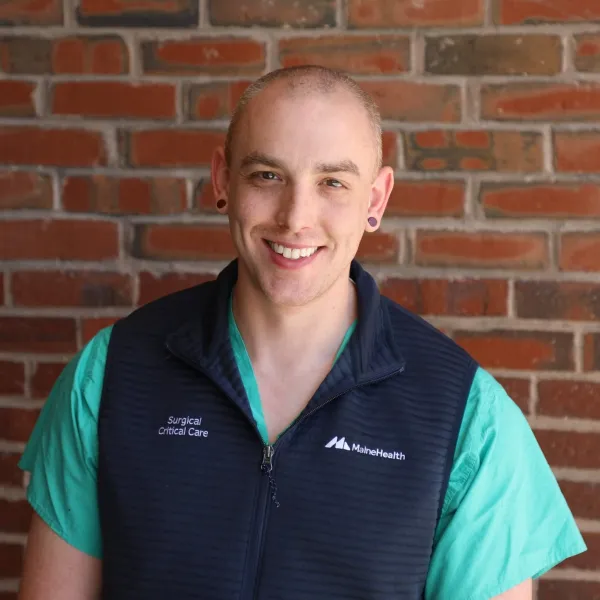
Nathan Laliberte, PharmD, BCPS, BCCCP
Pharmacy School: University of New England
PGY1 Pharmacy Residency: MaineHealth Maine Medical Center, Portland
nathan.laliberte@mainehealth.org

Life in Portland
Called the “Jewel by the Sea” by its celebrated native, Henry Wadsworth Longfellow, Portland combines vibrant city life with natural beauty and abundant recreation opportunities.

Resident & Fellow Well-Being
It's important to take good care of yourself during post-graduate training so you can fully participate in your education and patient care.

Stipend and Benefits
Resident and fellow benefits include health insurance, disability, dental/vision insurance and professional liability insurance.