PGY1 Community-Based Specialty Pharmacy
The PGY1 Community-Based Pharmacy Residency Program at MaineHealth Pharmacy Specialty & Home Delivery aims to provide residents with a myriad of learning experiences. Our goal is prepare residents for a fulfilling career in specialty pharmacy or clinic-based care. Upon completion of this program, residents will be proficient in specialty pharmacy operations, accreditation standards, and managing disease states commonly treated with specialty medications.
The PGY1 Community-Based Pharmacy Residency Program residency program offers:
- Clinic-based care rotations
- Teaching certificate
- Operations training
- Proficiency in URAC and ACHC accreditation
- Training with the latest dispensing technology
- Staffing one weekend per month at MHMMC Portland Retail Pharmacy
- Competitive stipend and benefits
An ideal place to live and work
Located in Greater Portland, our residents are less than two hours from Boston and just three hours from Acadia National Park. Join us and enjoy this beautiful, coastal location filled with four season outdoor activities, amazing restaurants, breweries and more!
Curriculum
Our curriculum is rooted in specialty pharmacy operations and clinic-based care, with opportunities to experience a wide range of disease states treated with specialty medications. Every year our curriculum is customized to the interests and needs of the resident. The program director and preceptors will work with the resident to optimize and adjust the program and learning experiences. Please refer to our manual for more information on learning experiences (PDF, 271.82 KB).
RPD: Stefanie Donovan, PharmD
Contact Info: stefanie.donovan@mainehealth.org
SRAC: All PGY1 preceptors
Program Structure
The MH PGY1 Community-Based Pharmacy Residency program at MaineHealth Specialty and Home Delivery is a 12-month, advanced training program that fosters the development of skills in direct patient care, academic teaching, preceptor development, and clinical research. The program builds on Doctor of Pharmacy education to contribute to the development of clinical pharmacists with advanced training in specialty pharmacy. Residents will have the opportunity to gain experience in both clinic-based pharmacy practice and specialty pharmacy operations. The opportunities will include program enrollment, patient education, medication access, fulfillment, compounding, and more. Residents will be exposed to a wide variety of disease states and the intricacies of the specialty medications used to treat them. Residents will also become well-versed in URAC and ACHC specialty pharmacy accreditation standards and have the opportunity to be involved in projects with our quality improvement team.
Program Objective
The Community-Based Pharmacy Residency prepares a resident to have intimate understanding of and ability to take a clinic role as a specialty pharmacist in any of the disease states offered as a part of their training, in addition to the essential knowledge of the enrollment, fulfillment, and insurance aspects of the specialty pharmacy operation.
Required Rotations
Descriptions of the required learning experiences can be found in PharmAcademic. The resident will gain the skills necessary to function as an independent clinical pharmacist during their required learning experiences with the expectation that the resident displays ownership of all aspects of the medication-use process. The resident will build relationships across the specialty team and involved clinics and will facilitate safe and high-quality direct patient care.
Elective Rotations
Elective rotations may be tailored to the resident’s interest and recognized areas for development. The rotations may be customized to the duration necessary for the resident but typically range from 4-6 weeks. The elective learning experiences may be scheduled in the second half of the residency year. New experiences may be created on a case-by-case basis if the resident has interest in a practice area not covered by the offered rotations.
The program structure for required and longitudinal learning experiences is outlined in the table below. An orientation period of 4 weeks will begin the residency and will be tailored to the resident’s prior experience.
| REQUIRED ROTATIONS | ||
|---|---|---|
| Rotation | Preceptor(s) | Duration |
| Orientation | Stefanie Donovan, PharmD | 4 weeks |
Administration - Longitudinal
| Corina Spanu, PharmD, MBA Brooke Gagnon, PharmD Sara Tyburski, PharmD | Duration of Residency (4 hours/week) |
| Teaching Certificate Program | George Allen, PharmD | Duration of Residency |
| Staffing - Medication Therapy Management | Sarah Hopkins, PharmD | Duration of Residency (4 hours/week) |
| Continuity Clinic - Longitudinal | Julie Waldrup, PharmD, BCACP | ~ 12 weeks |
| Staffing - Fulfillment | Dominic Pizzo, PharmD | ~12 weeks (4 hours/week) (post-licensure) |
| Staffing - TBD | Preceptor selected based on rotation | ~12 weeks (4 hours/week) |
| Dermatology & Rheumatology | Ruthie Cirincione, PharmD, BCACP Luke Jennings, PharmD, BCPS | 6 weeks |
| Cystic Fibrosis | Kayla Garvey, PharmD | 6 weeks |
| Gastroenterology, Endocrinology & Rare Diseases | Samantha DeLillo | 6 weeks |
| Neurology | Aaron Thibeault, PharmD Amanda Gousse, PharmD | 6 weeks |
| Oncology | Julia Schwechheimer, PharmD, BCOP Christopher Riccio, PharmD | 6 weeks |
| Transplant | Rebecca Pizzo, PharmD, CSP | 6 weeks |
| Virology | Carly Schenk, PharmD, BCIDP | 6 weeks |
| ELECTIVE LEARNING EXPERIENCES | ||
| Care for the Underserved | Sierra Oliver, PharmD, BCACP | 4-6 weeks |
| Weight + Wellness | Mackinleigh Isherwood, PharmD | 4-6 weeks |
| Endocrinology Clinic | Eileen Levesque, PharmD | 4-6 weeks |
| Cardiology/Pulmonology | TBD | 4-6 weeks |
| Home Delivery | Nick Bolognia, PharmD | 4-6 weeks |
| Primary Care | Julie Waldroup, PharmD, BCACP | 4-6 weeks |
| Advanced Disease State | Preceptor selected based on disease state | 4-6 weeks |
| DELIVERABLES/PROJECT LEARNING EXPERIENCES | ||
| Pharmacy Grand Rounds Presentation | Preceptor selected based on topic | 12 weeks |
| Research Project | Preceptor selected based on topic | 12 months |
| Secondary Project (MUE, clinical program development/enhancement/ analysis, pipeline forecast, cost or budget analysis, quality assurance) | Preceptor selected based on topic | TBD |
Pharmacy Practice Staffing
The resident’s service commitment is one 4-hour shift at SPHD Westbrook every week and two 8-hour weekend shifts at MMCP-Retail every month. The weekly service commitment will consist of staffing within the Specialty Pharmacy fulfillment center, medication therapy management with the home delivery team, or in another clinic or service need deemed by the RPD. Staffing may evolve based upon resident interest and departmental needs.
Research Project
The RPD/SRAC will supply the resident with a list of possible research projects to consider within the Orientation rotation of the residency. The resident may propose an original research project but must be vetted by specialty RAC and approved by RPD. Project selection and CITI training should be completed prior to the end of the orientation experience. Research project timeline will be determined by specialty RAC, RPD, and the resident. The resident will be expected to complete at least one research project each year. Additional research projects may be approved by RPD/SRAC if the resident is on schedule to complete primary research project assigned during orientation. The results of the research project will be presented to a local, regional, or national meeting as appropriate. A completed manuscript will be submitted for the research project before graduation with the understanding that an article suitable for publication will require additional work that may occur after residency completion.
Additional Projects
The resident will also be required to complete at least one secondary project. The resident will be expected to develop a project plan for a medication use evaluation, clinical program development/enhancement/ analysis, pipeline forecast, cost or budget analysis, quality assurance (e.g. HEDIS, STARS), or another approved project. This project will be presented to the appropriate service line(s) or committee(s). The resident must identify a content expert to work with in preparation for the project. A timetable for draft completion should be established in advance of the presentation/due date to allow the preceptor enough time to provide feedback. The resident is scheduled for their presentation/due date in advance. Refer to learning experience for a detailed review of what should be included in a formulary review, treatment guideline, or protocol.
Additionally, the resident will be required to develop a business plan for a new or enhanced service.
Teaching + Education
The resident will have various opportunities throughout the residency year to develop and strengthen their teaching and precepting skills. The resident will have multiple presentation opportunities throughout the residency year, including but not limited to, Pharmacy Grand Rounds, Specialty Pharmacy Lunch + Learns, presentations requested during clinical rotations, and more.
The resident will also participate in a Teaching Certificate Program and present at least one lecture at the University of New England College of Pharmacy. Participation in additional teaching opportunities will be discussed on a case-by-case basis. The resident may co-precept an advanced practice pharmacy experience student, as scheduling allows.
Resident Development Plan
The PGY1 Community-Based Residency Program utilizes the ASHP on-line evaluation tool PharmAcademic. The resident will complete two pre-residency questionnaires prior to the start of orientation that help the RPD design a residency year that is tailored to the specific needs and interested of the resident:
- ASHP Entering Interests Form
- Entering Objective-Based Self-Evaluation Form
The RPD uses the ASHP Entering Interests form and Entering Objective-Based Self-Evaluation form to create the resident’s development plan. The Residency Requirement Checklist and Development Plan will be discussed and modified, as necessary, through a collaborative effort between the RPD and the resident. In addition, the resident may request scheduled modifications throughout the residency year and the RPD will make all efforts to accommodate these requests. The RPD will share changes to the Development Plan to scheduled preceptors and during associated SRAC meetings.
Evaluation Strategy
Residents’ schedules are entered into PharmAcademic. For each learning experience, the following assessments are completed:
| Learning Experiences < 12 weeks | ||||
| Resident Evaluation of Learning Experience | Resident Evaluation of Preceptor | Preceptor Verbal Midpoint Evaluation of Resident | Preceptor Summative Evaluation of Resident | Resident Self-Summative Evaluation |
| End | End | Midpoint | End | End |
| Learning Experiences > 12 weeks | |||
| Resident Evaluation of Learning Experience | Resident Evaluation of Preceptor | Preceptor Summative Evaluation of Resident | Resident Self-Summative Evaluation |
| End | End | Quarterly (or midpoint) and End | End |
Note: For learning experiences greater than 12 weeks in length, a documented summative evaluation is completed at the 3-, 6-, and 12 month points, if applicable.
Summative Evaluations
- Summative evaluations assess the resident’s mastery of the required ASHP residency objectives
- Summative evaluations of these objectives will be completed by both preceptors and resident based on the following scale:
| Rating Scale | Definition |
|---|---|
| Needs Improvement (NI) |
|
| Satisfactory Progress (SP) | Resident is performing and progressing at a level that should eventually lead to mastery of the goal/objective
|
| Achieved (ACH) |
|
| Achieved for Residency (ACHR)* | Resident consistently performs objective independently at the Achieved level, as defined above, across multiple settings/patient populations/acuity levels for the residency program |
| *On a quarterly basis, the RPD will review all summative and quarterly evaluations completed for learning experiences that the resident has completed and assess the ratings rendered by preceptors for each objective assigned to be taught and evaluated. | |
- Summative evaluations will be completed using Criteria Based Feedback statements
- Preceptors and residents should complete their own summative assessments and then meet to discuss and review together prior to submission
- Any changes to the evaluation should be made in PharmAcademic, then finalized
- Summative evaluations MUST be completed within 7 days of rotation completion. Evaluations completed past 7 days of rotation completion without excused waiver from RPD/preceptor may result in corrective action.
- Evaluations are cosigned by the rotation preceptor as well as the RPD. The RPD may send an evaluation back for revision for multiple reasons, including but not limited to:
- Significant misspellings
- Criteria-based qualitative feedback statements not utilized
- Signing an evaluation (both preceptors AND residents) indicates that the evaluation has been read and discussed
The resident will complete a PGY1 Community-Based Residency Program evaluation in the last month of residency. Feedback will be discussed at the SRAC meeting and agreed upon changes will be incorporated into the next academic year.
- Aaron Thibeault, PharmD
- Amanda Gousse, PharmD
- Brooke Gagnon, PharmD
- Chris Riccio, PharmD, BCOP
- Corina Spanu, PharmD, MBA
- Dom Pizzo, PharmD
- Julia Schwechheimer, PharmD, BCOP
- Kayla Garvey, PharmD- Residency Program Coordinator
- Kelly Hammond, PharmD
- Kimberly Vesely, PharmD
- Luke Jennings, PharmD, BCPS
- Nick Bolognia, PharmD
- Rebecca Pizzo, PharmD, CSP
- Ruthie Cirincione, PharmD, BCACP
- Sam DeLillo, PharmD
- Sara Tyburski, PharmD
- Sarah Morrison, PharmD
- Stefanie Donovan, PharmD- Residency Program Director
Questions?
Please reach out to our Program Director:
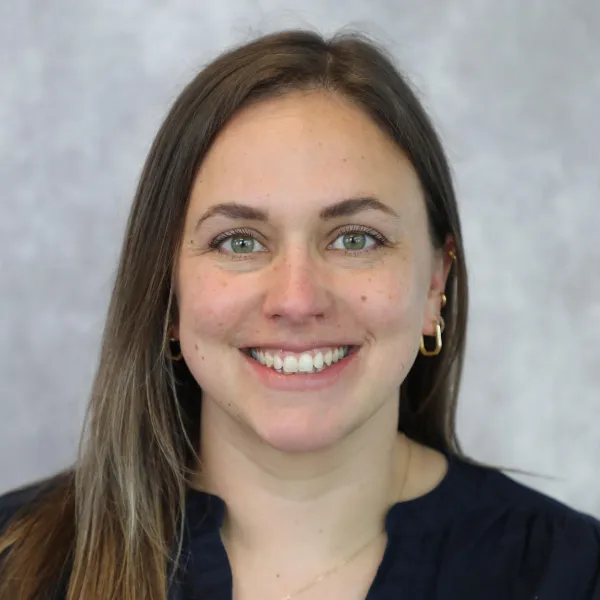
Stefanie Donovan, PharmD
Pharmacy School: The Wegmans School of Pharmacy at St. John Fisher University
PGY1 Pharmacy Residency: MaineHealth Maine Medical Center, Portland
stefanie.donovan@mainehealth.org

Life in Portland
Called the “Jewel by the Sea” by its celebrated native, Henry Wadsworth Longfellow, Portland combines vibrant city life with natural beauty and abundant recreation opportunities.

Resident & Fellow Well-Being
It's important to take good care of yourself during post-graduate training so you can fully participate in your education and patient care.

Stipend and Benefits
Resident and fellow benefits include health insurance, disability, dental/vision insurance and professional liability insurance.